
Bend it!

Mapping it out
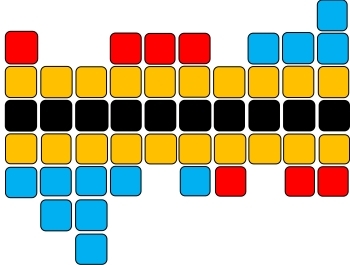
In our bid to master the art of draw bending, first it’s important to quantify the task in hand. Knowledge is power. It’ll also save embarrassment on the bandstand. We know that without any bending at all, we can produce 19 different notes on the 10 hole diatonic harmonica. These are the yellow squares in the picture above. You’may be thinking ‘hold on a moment, 10 blow notes and 10 draw notes is a total of 20 notes’. Well fundamentally you’re right, however 3B and 2D repeat the same tone, so the available note selection is actually one less than 20. If this is new to you, try 3B and 2D on 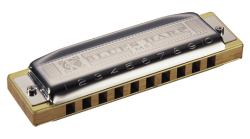



Terminology
With fluent use of the 12 regular bends (blue squares) and 7 over bends (red squares), it is possible to produce 38 new notes on the diatonic harmonica, simultaneously turning it into a fully chromatic instrument. But we’d have to be advanced players with many practise hours under our belts before we could manage all of these. For beginner and intermediate players, regular bends are plenty to be going on with. But just before we get stuck into them, let’s quickly clarify the terminology we’re using. Regular bends, the easiest bends to achieve, is a collective term for the eight regular draw bends (holes 1, 2, 3, 4 and 6) and the four regular blow bends (holes 8, 9, and 10). Once again, these are the blue squares in our diagram. Mastering all the regular bends will add twelve new notes to our tonal range. This is a significant achievement and mercifully they’re within everyone’s grasp. With the regular bends firmly in our skill set, and fluency in 1st, 2nd and 3rd positional playing, we are ready to realise our musical aspirations and share good times with others. Overbends is a collective term for the four overblows (holes 1, 4, 5, and 6) and the three overdraws (holes 7, 9 and 10), adding a final seven notes to our tonal range. And again, these are the red squares in our diagram.
Caveat Emptor
Unless we can already play individual notes cleanly and with tone, we’re on a hiding to nothing with reed bending. Air leakage, and catching neighbouring holes, strips us of the basic disciplines we need. If you have yet to master single note playing, put the quest for 

Countless intermediate students have arrived at Harp Surgery lessons or workshops believing they can already bend. On closer scrutiny however, it is clear they have missed the basics, or their bends simply aren’t watertight. The Good Doctor’s advice to anyone investigating bends is be thorough. This skill makes our instrument unique and we need to understand how, why and where bends occur before we start to experiment. We must avoid approximating them, then going live armed with cheap imitations, in the belief we are already a Jedi harp master. Stark exposure can be a wounding lesson, and it’s best avoided.
So to begin with, ask yourself the following questions – and if you are uncertain about any of the answers, there’s important groundwork to be done. How many draw bends are there? How 

Why bends happen
The answer is a quirk of engineering, some physics, some musical theory and a healthy dose of pure magic. First of all, bends occur where two free reeds share the same chamber 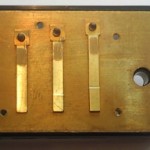

Let’s put that another way. Where two harmonica reeds equate to two white 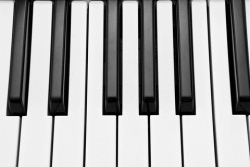

How bends happen
In simple terms, whether drawing or blowing, regular bends move from the higher note to the lower note. In holes one to six, the higher notes are the draw notes, so we encounter draw bends. In holes seven to ten however, the higher notes are the blow notes, so we 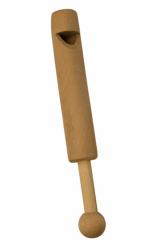

The technique involved is almost exactly the same as changing the pitch of a note when you whistle. When we blow or draw the higher reed normally, it vibrates in pitch. By adjusting our vocal tract – the area between the back of our tongue and back of our throat – and using our tongue as a plunger, we create the appropriate resonant space for our intended bent note and also apply the air-pressure needed to flex the reed, altering its pitch as we do so (it’s like playing a Swanee Whistle). The airflow across the higher reed slows and the lower reed starts to vibrate in sympathy. As the reed flexes, a dip 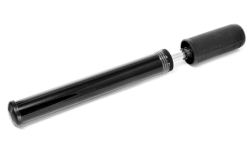

The bending process can be broken down into three steps. Firstly, the front of the tongue triggers the reed, by using a sipping movement or a more percussive ‘reverse spit’ (pretend to spit out a grape pip, then do this in reverse). Next comes the ‘K’ spot. Try saying ‘Kit-Kat’, or ‘Kah-kah-kah’, and notice how your tongue touches the roof of your mouth to produce the ‘K’ consenent. Now hold this contact point and pull the ‘K spot’ backwards as you breathe in through pursed lips. You’ll hear a sucking sound rather like a bicycle pump filling up. Finally, try whispering ‘hello Harry, how high have you hopped?’ or make a fake laugh ‘ha ha ha ha’. The ‘H’ spot is the control area you’ll be transferring everything towards at the back of your vocal tract. Arching your neck slightly can help create the extra space for this – especially on the deep draw bends in holes one and two. More about technique later. First let’s get theoretical…
Where bends happen
We have already learned that it’s the difference in pitch between two reeds sharing a channel that determines the potential for additional bent notes. So it follows that wherever the difference – or interval – between two reeds is greater than a semitone, you will find a 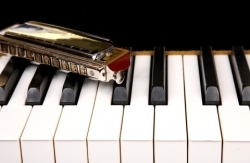

Quantifying the draw bends
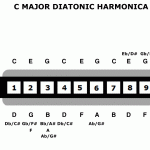

In holes one and four, where the blow note is a C and the draw note is a D, there is one semitone in-between (C#) and correspondingly one draw bend. In hole two, where the blow note is an E and the draw note a G, there are two semitones between (F# and F) and correspondingly two draw bends. In hole three, the blow note is a G and the draw note is a 


For any diatonic harmonica teacher, note bending is one of the hardest techniques to teach. It can’t be shown, it can only be demonstrated, explained and heard. Dave Barrett has produced an ultrasound video of the process, which is fascinating, but even this doesn’t teach us the practical skills we need. Ultimately, like walking, whistling and riding a bike, we have to work it out for ourselves. However, to help you on your way, here’s how the Good Doctor steers his students towards their Holy Grail.

- Accuracy and tone first
It’s fine to experiment with bends. Many players discover the 2D hole bend even before they know that bends officially exist! But there’s little point attempting bends before you can play clear, single notes with good tone. Only then are you able to direct your breath efficiently and only then are you truly ready for the next step.
- Maintain your embouchure

- Think the note
This may sound strange at first, but it helps. You prepare your vocal tract when you want to whistle a note without really thinking about it. The same goes for singing and speaking. Note bending follows the same path. The reeds replace your vocal chords!
- Whistle backwards
Whistling normally at first, blow a high note and gradually lower the pitch as far as you can. Now try this in reverse, whistling inwards. Notice how your tongue and vocal tract positions alter. This is the same as the bending process, so all you need to do is attach your reverse whistle to a harmonica!
- The clutch analogy
As you start to bend, you engage the reed and feel a pull or purchase from the back of your tongue and your vocal tract. It’s like sipping froth from hot chocolate. As you start to pull your tongue back, the reed flexes and audibly dips or chokes for a split second.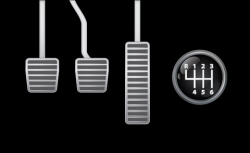

- Ee-you-yore and the K Spot
This has nothing to do with melancholic donkeys or anatomy. This method demonstrates how control is transferred from the centre of your mouth tract to the back of your vocal tract. Your tongue effectively works as a plunger drawing the reed into a bend and holding it there. Start by saying ee-you-yore out loud. Running the words together, say this again and note what’s happening to your tongue. It falls back in stages until you are effectively ready to yawn. Now purse your lips, or tongue block, and articulate the same words, drawing inwards this time. Ee is the first stage of the process, when you engage the reed. You is the pre-bend, when you gain a purchase on the reed. You should detect an audible dip in the tone of the reed. Be aware that it’s easy to overshoot this point, as explained above. Yore is when you transfer control to the back of your throat, applying more pressure to the reed as you do so and bending it accordingly. Apply this three-step process to 4D and see what happens. Now try it on 1D. Usually you’ll find that one of these starts to dip. A similar method is to say the letter K as we’ve mentioned before, and note where your tongue touches the roof of your mouth. Moving the K spot back will help engage the reed and deliver your bend.
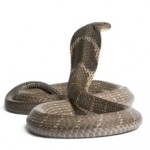
- Milk shake, snake bite and a bicycle pump

- Abseiling

- Sip and Swallow

Different reeds have different characters
When you start out, you will notice how some bends seem easier than others. More often than not the two draw bend can be elusive and the three draw bend can be hard work. Don’t lose heart. It will all come with practice. The lower reeds take more effort because they are longer and more air is being moved. You will learn to adjust and your head may drop slightly to afford more space for your tongue and vocal tract to retreat. In time you will also learn to economise your effort, getting more bend for your pound per square inch (psi).
Direct bending
Once you have found all your bends, there’s still plenty of work to be done. You’re probably still approaching them from above – scooping into them. This is normal, but eventually you will need 

The trigger
You may find it helps to trigger direct bends by placing your tongue behind your teeth and sounding a short reversed ‘tuh’ to get things started. Alternatively, try using the K spot further back and attack the direct bend with a reverse ‘Kooo.’ It is normal to scoop into direct bends until you develop enough muscle memory to hit them head on. Throw away your crutches as soon as possible and learn to play each one cleanly. Accurate direct bending marks the difference between those who think they can bend, and those who know they can.
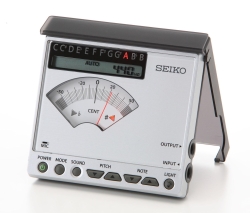
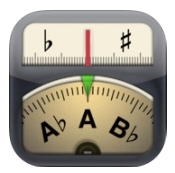
How do I know I am getting an accurate bend?


Do’s and dont’s
Do persevere. Do be thorough. Do perfect your direct bends. Don’t be satisfied with half measures. Drag those whole bends right down into the muck! Don’t avoid the 3D bends. They are tricky and their inherent inaccuracy is the weak point on the diatonic harmonica. Embrace it!
